
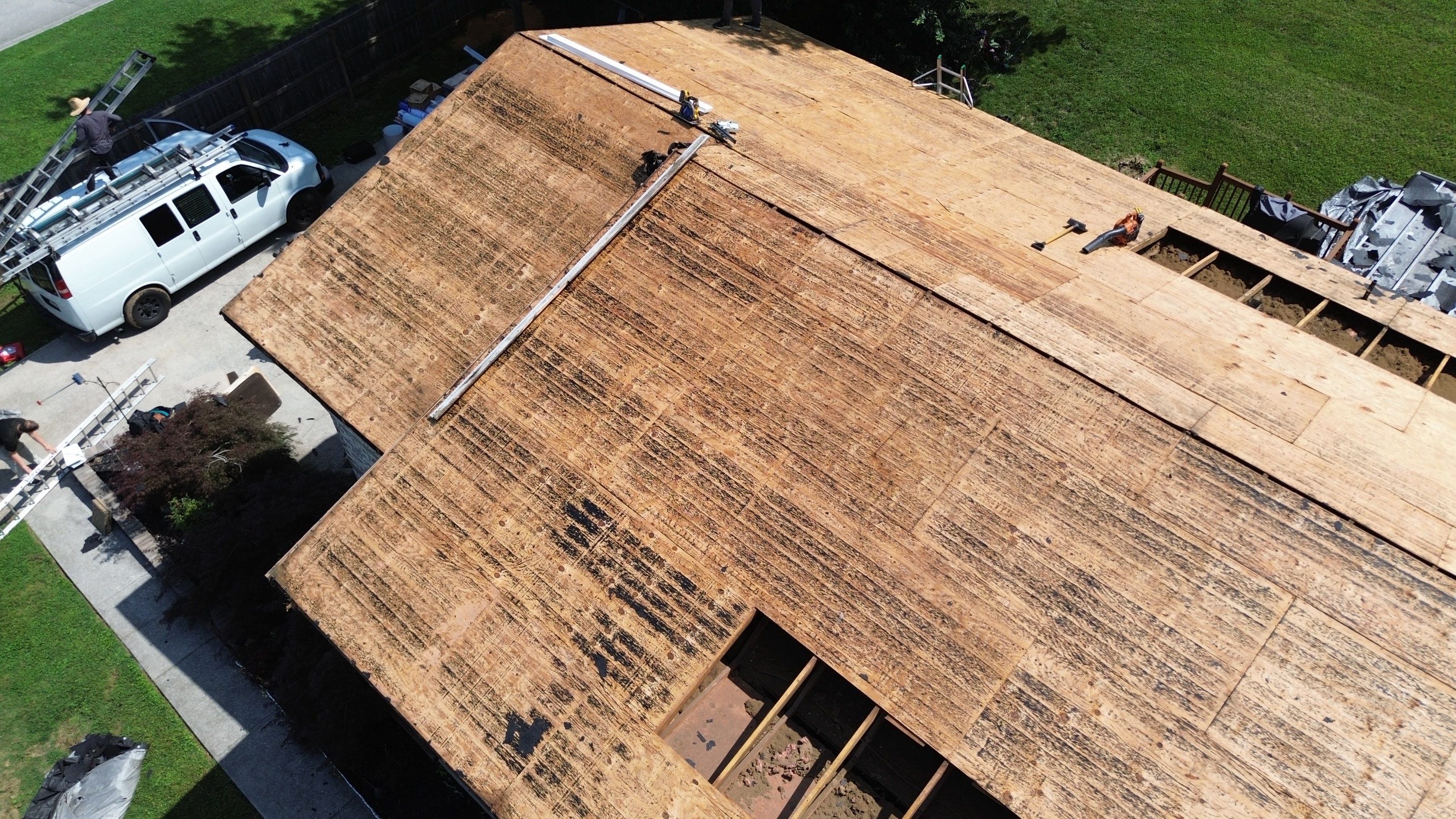
The Roof-Edge Details That Cause the Most Leaks on Knoxville Homes
A roof leak rarely starts where people expect. Ask around and you'll hear "a missing shingle in the middle of the roof." Valor Roofing finds the edge is usually to blame instead, where the deck meets the fascia, the gutter, and the open air. It takes the most water, the worst of the freeze-thaw cycle, and gets checked the least of anywhere on the roof.
Why the edge takes more abuse than the rest of the roof
Every drop of water that lands on the roof has to cross the edge on its way to the gutter. Wind uplift is also strongest at the perimeter, not the middle of a roof plane. Layer East Tennessee's freeze-thaw winters on top of that, and a small gap at the edge stops being a one-time issue. It becomes a repeat problem that shows up again every time the weather cycles.

Drip edge
Drip edge is a thin strip of metal flashing along the eaves and rake edges. Its job is to send water into the gutter instead of letting it wick back underneath the roofing material. Code has required it on asphalt shingle roofs since the 2012 edition of the International Residential Code, Section R905.2.8.5. Fasteners go every 12 inches, and underlayment laps over it at the eaves. A lot of homes built or reroofed before that requirement caught on skipped it entirely. The fascia rots years later, and by then nobody connects it back to a missing strip of metal that was never there.
Fascia and soffit
The fascia is the board running along the roof edge that holds the gutter. The soffit is the underside surface that closes off the eave and often houses ventilation. When drip edge is missing, undersized, or installed wrong, water gets behind the fascia instead of into the gutter. That rot is usually invisible until the board goes soft enough to notice by hand. And because the fascia is what the gutter hangs from, a rotted board eventually takes the gutter attachment down with it.

Ice and water shield at the eaves
This self-adhering waterproof membrane goes down at the eaves first, before the rest of the underlayment. The eave edge sees more standing water and ice buildup than anywhere else on the roof, so it needs the extra layer. Here's the failure it's guarding against: heat escapes through the attic, melts snow higher up the roof, and that water refreezes once it hits the colder eave overhang. The resulting ice dam pushes water backward under the shingles instead of letting it drain. Ice and water shield at this one spot is what stops that from happening.
Gutters and downspouts
Gutters aren't an add-on bolted to a finished roof. They're part of the edge system. An undersized, clogged, or sagging gutter forces water to back up against the roof edge instead of draining away from the house, and that puts pressure on every other component at the edge. Seamless gutters installed with a new roof, tied into the new flashing, keep the whole system working together instead of as parts installed at different times by different people.
Roof-edge components at a glance
| Component | Function | Sign of failure |
|---|---|---|
| Drip edge | Sends water into the gutter, away from the fascia | Water staining or wicking marks on the fascia board |
| Fascia | Trim board that anchors the gutter and closes the roof edge | Soft or visibly rotted wood at the roofline |
| Ice and water shield | Waterproofs the eave against ice dam backup | Ceiling stains near exterior walls after freezing weather |
| Gutters and downspouts | Carries water away from the roof edge and foundation | Overflow during rain, sagging sections, standing water at the base of the house |
What to check from the ground
- Streaking or dark staining running down the fascia board
- Gutters pulling away from the roofline or sagging between hangers
- Granules collecting near the downspouts after a storm
- Water spilling over the front edge of the gutter during moderate rain
- A soft spot when you press on the fascia board with a gloved hand
Why this gets missed
A shingle failure in the open field of a roof is visible and usually gets fixed fast. Edge failures aren't. Rot behind a fascia board, or water wicking under a missing drip edge, can run for a season or more before it ever shows up as a stain on a ceiling. By then, what would have been a flashing fix has turned into a fascia and decking replacement. A roof inspection that actually checks these details catches the problem while it's still cheap to fix.
Frequently asked questions
What is drip edge and why does it matter?
It's a thin metal flashing strip at the eaves and rakes, and its only job is sending water into the gutter instead of letting it wick back under the shingles or behind the fascia. Required on asphalt roofs by code since 2012.
Can a missing drip edge really cause serious damage?
It can. Water finds its way behind the fascia board over time, and by the time the rot is visible, the wood's usually been compromised for a while, often years past the original install.
Why do ice dams form at the edge of the roof specifically?
Attic heat melts snow higher up the roof. That runoff hits the colder eave overhang and refreezes, and the dam it builds pushes water backward under the shingles instead of down into the gutter.
Do clogged gutters actually affect the roof, or just the gutters?
The roof takes the hit too. A gutter that can't drain backs water up against the edge and the fascia, adding sustained moisture right where the roof is already most stressed.
How do I know if my roof's edge details were installed correctly?
Have someone check the fascia, the drip edge, and the eave underlayment directly. None of that is visible from the ground once gutters are installed.
Get the edge checked
The parts of a roof most homeowners never think about are usually the ones causing the leak. Valor Roofing installs drip edge, ice and water shield, and gutters as one system, not separate afterthoughts, on every job across Knoxville, Maryville, Oak Ridge, Farragut, and Seymour. Request a free inspection or call (865) 468-8726.
Free, photo-documented inspection and a firm written price. No pressure, no in-home sales pitch.